
Diane has provided excellent business and tax services to us for over 10 years . Diane is customer focused, prompt and courteous. She listens to our concerns and responds with sound, honest financial advice – Patrick and Christine Forster, Sterling Tractor Service “
Self Managed Superfunds
Setting up and managing your own superannuation sounds like a great idea – a self-managed fund can give you the flexibility to control where your retirement savings are invested.
Although the money is locked away until you retire, the superfund can help you to build wealth – through shares, fixed interest investments or property, for example.
But BEWARE! Self Managed Super Funds (SMSFs) are heavily regulated by the Australian Taxation Office. There are hundreds of rules that you must comply with or risk the wrath of the ATO.
Property investmen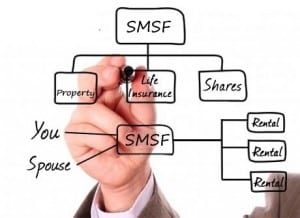 ts through super are in the spotlight right now.
The ATO is worried people are using their SMSFs to invest in real estate without fully understanding their obligations under the law, and that some people are deliberately trying to get around the law.
“[That] can result in the fund’s trustees being disqualified, facing civil penalties or even facing criminal charges,” the ATO says.
Some arrangements, if structured incorrectly, can’t be restructured or rectified, he warns.
“The only option may be to unwind the arrangement, which could involve forced sale of assets at an inconvenient time. This could be very expensive for the fund with potential stamp duty and tax consequences.”
What you should (and shouldn’t) do:
- Make sure your arrangements are legal and always seek professional advice if in doubt.
- If you’re using borrowed money to buy a property through your SMSF, make sure you have established a holding trust by the time the purchasing contracts are signed. A property with debt must be held in a trust inside the fund, even though that might mean incurring extra set-up costs. Also, make sure the property is held in the name of the holding trust’s trustee, not the individual member’s name.
- Don’t borrow money to pay for improvements or renovations to a property held inside the SMSF. The ATO will not allow that. This is an understandably unpopular situation and industry participants are pressuring the ATO to change this rule, but for now, that is how the rules stand.
- Do not purchase residential property or unlisted shares through the SMSF, from someone related to you. That means your spouse, family members or business partners – even if the transaction is supported by a registered valuation. However please note that it may be that you are allowed to buy commercial property or listed shares from a related party.
- Make sure your SMSF has no more than four members – even though that might mean you have to leave family members out of the fund.
- Make sure the fund’s trust deed is up to date.
- Obtain advice if in doubt.
Is Cloud Accounting For You?
 Is Cloud Accounting For You?
As part of the trend towards ‘cloud computing’ there has been a major move to accounting applications being made available online. Initially, accounting software for the cloud was very basic but it is becoming more and more sophisticated. Quickbooks and MYOB both now offer cloud options and a major player Xero which only provide cloud accounting is offering an excellent product for small business users.
So what are the pros and cons
- You can access data from any computer, anywhere ( even on the beach, if you can access an internet connection) – you don’t need to load the software on your computer – this also means your accountant or book-keeper can access your data which in turn means you don’t have to backup the file, send it and then wait for your accountant or book-keeper to send it back before you can carry on entering your information – it all happens almost “livetime”.
- Cloud applications are normally on a monthly subscription basis- when you no longer need it you simply stop paying for it. This can mean that the software is ultimately more expensive however you will have access to all updates and upgrades without having to download and install them and more importantly you don’t have to pay an upgrade fee each year for the software.
- Information from your bank statements is normally automatically downloaded into the software -this means less data entry and time spent by you and therefore more time for you to do what you do best – and in the case of your book-keeper or accountant doing the data entry for you, this will lead to a more efficient and accurate and less time consuming system of data entry
- In remote areas particularly cloud computing may be difficult if there isn’t a reliable broadband service.
- Some may be concerned with security issues however all software sellers state that their clouds are encrypted and data is secure.
- In some instances the software may work out to be more expensive especially if you are using a basic software package and you don’t need to upgrade every year.
The attitude towards cloud computing is being compared to internet banking. Many of us were concerned about internet banking when it was first introduced but now it is readily embraced. If you think that cloud computing may be the answer for your business then contact us on (08) 9300 3240 to find out more.
|
|

|
From 2012-13:
These amendments only apply to small businesses that have an aggregated turnover of less than $2 million. Aggregated turnover includes the annual turnover of the small business and the annual turnovers of any connected or affiliated businesses. |
The Bad NewsSmall business concessions: removal of the entrepreneur’s tax offset from 2012-13 |
|
From 2012-13, the entrepreneur’s tax offset can no longer be claimed. The entrepreneur’s tax offset may still be applied to assessments for applicable income years up to and including 2011-12. |
& The Ugly News
Private health insurance and Medicare levy surcharge change |
|
The government has introduced changes to the private health insurance rebate and the Medicare levy surcharge. From 1 July 2012, the private health insurance rebate and the Medicare levy surcharge will be income tested against three new income tier thresholds. Higher income earners will receive less private health insurance rebate or, if they do not have the appropriate level of private patient hospital cover, the Medicare levy surcharge may increase. The ATO will determine the amount of your private health insurance rebate entitlement when you lodge your income tax return. This may result in a refund or a liability for you. |
The ATO is looking hard and long at the “cash economy”

The Tax Office will be making it harder for people in business who deliberately use cash transactions to hide their income and to evade their tax obligations.
Strategies used by the Tax Office to tackle the cash economy include the publication of benchmarks, educating the community, acting on information from the community from suspected tax evasion, and the use of data matching to highlight discrepancies
|
We summarise below some of the Data Matching Strategies being implemented
|
Credit and Debit Card data matching |
|
|
|
|
|
|
|
|
|
|
|
|
The ATO obtains data from banks which identifies credit and debit card sales being made by Australian businesses. This data is matched against taxpayer records to identify those participating in the cash economy, and who are potentially skimming some or all of their cash takings or in other ways not reporting all of their income. The credit and debit card data-matching program identifies transactions conducted for all merchants with a turnover of less than $10 million in the 2010-2011 financial year. The bank data is then used to identify businesses that:
|
Motor Vehicle data matching
|
Data is collected from the state and territory motor vehicle registering bodies. This data is then matched against taxpayer records to identify those participating in the cash economy, and who may not be declaring all their income or deliberately avoiding their tax obligations. The motor vehicle data-matching program identifies all motor vehicles sold, transferred or newly registered in the 2010-11 financial year where the transfer and/or market value is $10,000 or greater. This data is then used to
Online Selling data matching |
|
Data obtained from eBay Australia and Trading Post Australia will identify members of online selling sites who are involved in selling goods and services of a total value greater than $20,000 in any of the past three financial years – 2007-08, 2008-09 and 2009-10. This data is then used to:
Share Market Transactions data matching |
|
Data is obtained from ASX Limited, Computershare Limited, Link Market Services Limited, Advanced Share Registry Services Ltd and Registries Limited. This data is then used to :
Economic Stimulus Payments data matching |
|
Data has been collected from government departments and businesses that manage payments for the Nation Building Economic Stimulus Plan, in order to detect participants in the Building, Construction and Ceiling Insulation Industries This information will be compared with taxpayer records to determine whether taxpayers have reported these payments in their income tax returns and/or their business activity statements. It is expected that approximately 30,000 records will be matched that relate to more than 5,000 taxpayers. Building Industry data matching |
|
Data obtained for the building services industry data-matching program includes:
The ATO have obtained details of individuals or businesses that hold a trade account with purchases between $10,000 and $3 million in the 2009-10 financial year from a major Australian warehouse chain. Also complaints and/or licensing information for the 2009-10 and 2010-11 financial years from New South Wales Fair Trading, the Queensland Building Services Authority, the Government of South Australia, and Consumer and Business Services has been collected The Building industry data has been used to pilot the approach of using supplier data to identify businesses in the building industry who use cash transactions to avoid their tax obligations or who fail to report some or all cash transactions. The data is used to identify:
Coffee Suppliers data matching |
|
The data collected from a number of major coffee suppliers identifies businesses that have purchased a total 15 kilograms of coffee, or more, per week in the 2009-10 and 2010-11 financial years. The data is used to identify:
|
In a recent Media Release, the Tax Office made it clear that it will continue to focus on industries which have ready access to cash in their business dealings.
The Tax Office has indicated that more than 500 million transactions were matched in the past year.
Call us now for further information on what this may mean to you and your business on (08) 9300 3240
Latest from the ATO re Personal Tax Changes
Personal tax changes from 1st July 2014
Temporary Budget Repair Levy
A 3-yea r temporary levy on individuals with taxable incomes in excess of $180,000 per annum (and, therefore paying tax at the top marginal rate – currently, 47%, including the Medicare Levy), will be introduced on 1 July 2014.
From 1 July 2014 until 30 June 2017, the Temporary Budget Repair Levy will apply at a rate of 2% on an individual’s taxable income in excess of $180,000 per annum.
Example of what this means for Individuals:
Taxable income of $180,000 or below NO LEVY PAYABLE
Taxable income of $200,000 Pay 2% of $ 20,000 i.e. $ 400 levy
Taxable income of $300,000 Pay 2% of $120,000 i.e. $2,400 levy
Tax rates 2014- 2015
The following rates for 2014-15 apply from 1 July 2014.
| Taxable income | Tax on this income |
| 0 – $18,200 | Nil |
| $18,201 – $37,000 | 19c for each $1 over $18,200 |
| $37,001 – $80,000 | $3,572 plus 32.5c for each $1 over $37,000 |
| $80,001 – $180,000 | $17,547 plus 37c for each $1 over $80,000 |
| $180,001 and over | $54,547 plus 45c for each $1 over $180,000 plus further 2c levy |
Net Medical expenses tax offset being phased out
There is a gradual phasing out the net medical expenses tax offset. Only those taxpayers who claimed the medical tax expenses offset in 2012/13 and again in the 2013/14 year can continue to be eligible for this rebate in 2014/15 (pending having net expenses above the relevant thresholds). The offset will continue to be available for out-of-pocket medical expenses relating to disability aids, attendant or aged care until 1 July 2019.
Low income tax offset changes
From 1 July 2012, the low income tax offset (LITO) threshold will increase from $30,000 to $37,000, with individuals entitled to receive the offset if their taxable income is below $66,667. The maximum value of $445 will begin to be phased out at the reduced rate of 1.5 cents for every dollar of taxable income over $37,000.
From 2015-16, individuals will be entitled to receive the LITO if their taxable income exceeds $37,000 but does not exceed $67,000. The maximum value of the LITO will be reduced to $300 and will begin to be phased out at the rate of 1 cent for every dollar of taxable income over $37,000.
Low income tax offset: summary table
| 2011-12 | 2012-13 | 2015-16 | |
| Amount | $1,500 | $445 | $300 |
| LITO begins to be reduced at | $30,000 | $37,000 | $37,000 |
| You are no longer eligible for LITO at | $67,000 | $66,667 | $67,000 |
| Withdrawal rate | 4% | 1.5% | 1.0% |
Abolition of the following Tax Offsets as from 1st July 2014:
- a. Dependent Spouse Tax Offset (DSTO)
Phase out of the eligibility to claim DSTO commenced in 2012. With the exception of taxpayers who are entitled to claim the Zone Tax Offset, the Overseas Forces Tax Offset and the Overseas Civilians Tax Offset, from 1 July 2014 there will no longer be an available claim for taxpayers, irrespective of the spouse’s age.
- b. Mature Age Tax Offset (MAWTO)
Phase out of eligibility commenced in the 2013 income year by limiting it to taxpayers born before 1 July 1957. From 1 July 2014 there will no longer be an available offset for any taxpayers irrespective of age. In place the government is establishing a Restart Program to encourage employers to hire mature aged workers. The employer will receive the incentive payment of up to $10,000 to be paid over a 24 month period.
- c. First Home Saver Accounts Scheme
New accounts opened after 13 May 2014 will not be eligible to any co-contributions, Tax or Social Security concessions. For existing account holders the co-contribution will cease from 1 July 2014 and tax concessions and income and asset test exemptions for government benefits will cease from 1 July 2015.
As of 1 July 2015 account holders will be able to withdraw their account balances without restriction and these accounts will be treated like any other account.
Pensioner and senior Australians tax offsets
From 1 July 2012, the pensioner tax offset (PTO) will no longer be available. Individuals previously eligible for the PTO will be eligible for the senior Australians tax offset (SATO). To reflect this merger, SATO will be known under the new name of senior and pensioner tax offset (SAPTO)
Superannuation Guarantee Rate Increase
The Superannuation Guarantee rate will increase from 9.25% to 9.5% from 1 July 2014. The Superannuation Guarantee rate will remain at 9.5% until 30 June 2018 and then be increased by 0.5% each year until it reaches 12% in 2022/2023.
Medicare levy low-income threshold and Medicare levy surcharge
From 1 July 2014, the medicare levy has been increased from 1.5% to 2%.
source; taken from the ATO website http://www.ato.gov.au/content/00309813.htm